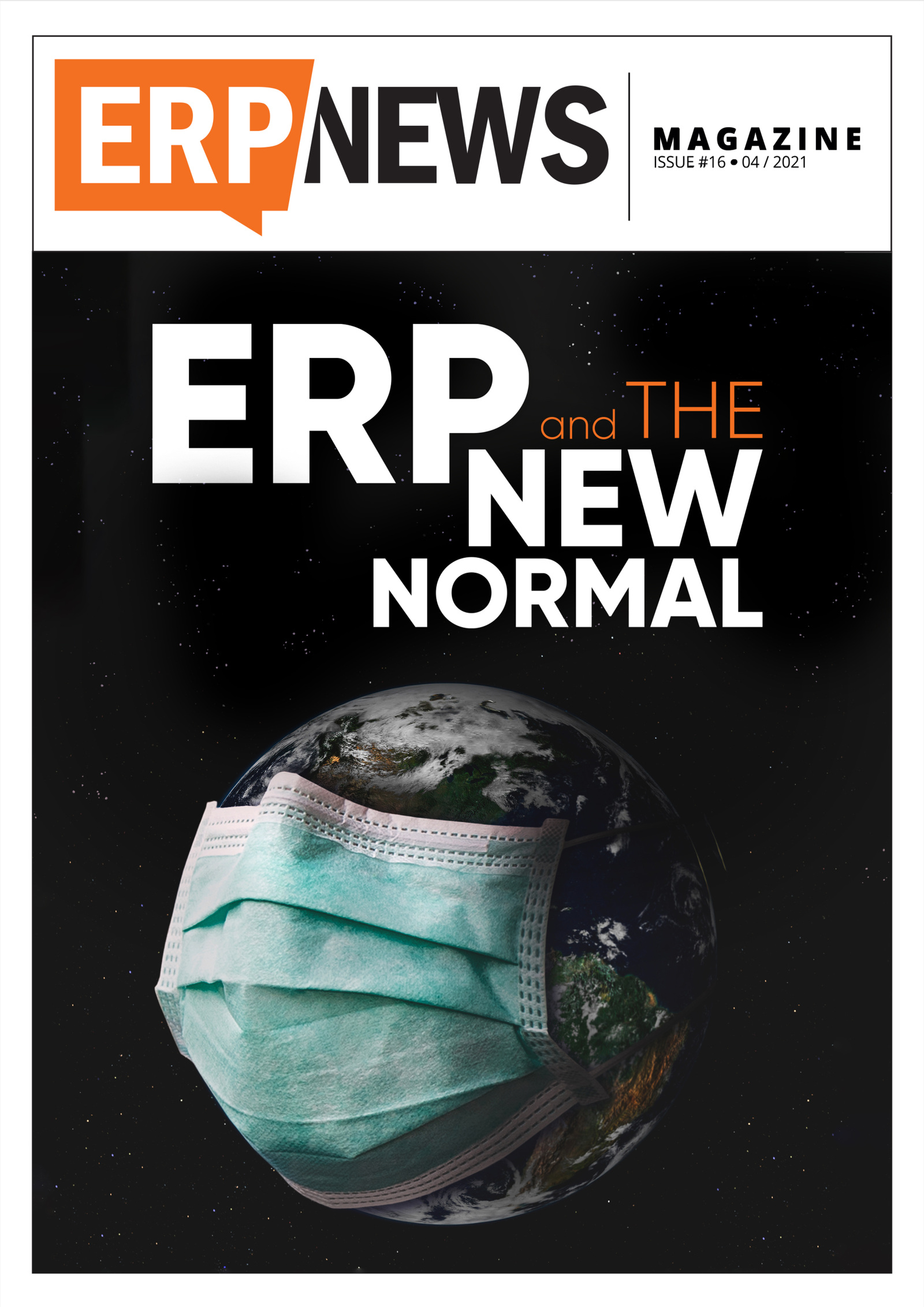
ERP and the New Normal
Cloud ERP, connected data and adaptable operations: navigating new ways of working with ZAP insights, implementation guidance and industry perspectives.
About this issue
ERP and the New Normal
What does an ERP system need to provide when people, customers and supply chains can no longer operate as before? ERP News Magazine Issue 16, dated April 2021, explores the operational changes accelerated by the pandemic. Cloud access is a central theme, but the contributions also address reliable data, flexible application architecture, supply chain coordination and the work involved in implementation. The issue connects the urgency of digital transformation with choices about how organizations prepare their people, processes and information.
Executive Perspectives and Enterprise Data
In the issue's principal interview, Trey Johnson, ZAP's Chief Evangelist and leader of its Americas business, discusses the challenge of turning ERP data into useful business intelligence. ZAP Data Hub combines information from ERP, CRM, spreadsheets and other applications before presenting it through tools such as Microsoft Power BI, Tableau or ZAP's visualization layer. Johnson distinguishes the preparation of complex ERP data from the dashboards used to explore it. His discussion of Sage Data & Analytics explains the relationship with Sage, including the offering for Sage 100 and Sage 300, and the value of combining financial and operational information across changing business conditions.
Joe Tsidulko's report on a conversation between Accenture CEO Julie Sweet and Oracle CEO Safra Catz introduces the idea of compressed transformation: businesses attempting several changes together and expecting faster deployment. The account emphasizes flexible technology, established partnerships and the human side of change. It is a reported executive discussion rather than a separate ERP News interview or a measured implementation study.
Cloud ERP, Architecture and Ways of Working
Lucy Thorpe, Head of Content at InCloud Solutions, identifies five cloud ERP benefits illustrated by lockdown experience: speed, productivity, access to decision makers, the ability to change direction and hybrid working. Her contribution and accompanying expert panel consider collaboration and shared information across dispersed teams. Nishant Joshi, Technical Writer at Sage Software Solutions Pvt Ltd, examines cloud ERP, healthcare administration and supply chain coordination in the new normal. His article presents application possibilities and strategic arguments, rather than proof that ERP alone delivers clinical or financial outcomes.
Evan Quinn, Principal Director of Marketing at QAD, examines why heavily customized ERP can become difficult to change. His alternative is a layered services platform that separates common capabilities, supports APIs and enables extensions through low-code or no-code tools. Dr. Stefan Sigg, Chief Research and Development Officer at Software AG, approaches a related problem through reusable cloud components. He argues that organizations should concentrate their development effort on the distinctive final part of a solution instead of rebuilding platforms unnecessarily or becoming overly dependent on a single technology route.
Customer Stories and Implementation Context
Australian submarine and warship builder ASC selects IFS as part of a digital transformation program intended to improve integration, real-time information and support for Collins Class submarine sustainment. Deloitte is the implementation partner, with Novacura and BluePrism also participating. The report describes the program's intended benefits and an expected creation of approximately 35 jobs; it does not present completed savings or a finished rollout.
Kaplan Kardesler Halı, a Gaziantep carpet manufacturer, signs an agreement with IAS to manage business processes using canias4.0. Its leadership emphasizes the need for responsive, flexible solutions after difficulties obtaining the desired fit from earlier approaches. The article records a project decision and expectations for the partnership, without a quantified post-implementation result.
Dataquest's own migration to Acumatica provides the issue's practical implementation example. Principal Arline Welty describes bringing information from separate CRM, ERP and billing applications into a centralized environment. The account stresses preparation and prioritization: correcting contacts, removing obsolete records, mapping legacy fields, transferring data and checking that information remains accessible. Dataquest reports that a shared system reduced the need to search across separate applications and supported broader use of quoting, communications, marketing and sales capabilities. No numerical migration duration or verified ROI is supplied.
UserTesting appears in Auditoria.AI's financing announcement as a customer testimonial. Chief Business Officer Tien Anh Nguyen reports improved receivables productivity and the ability to complete three to four times as many tasks. This is an attributed customer statement in a vendor announcement, without an independently documented measurement method or a basis for generalizing the result to every finance team.
Supply Chains, Projects and Manufacturing Readiness
Cas Brentjens, Infor Vice President of Supply Chain Management for APAC, describes four complementary control-tower capabilities: visibility, prediction, decision support and collaborative execution. His argument centers on shared data and coordinated action across supply chain participants. Mark Humphlett's manufacturing article summarizes recommendations from Phil Lewis, Infor VP Solution Consulting EMEA. Before starting transformation, organizations should examine their readiness for change, define the intended outcome and assess whether their systems can support it.
Joseph Clancey, Product Marketing Specialist at Oracle NetSuite, previews OpenAir 2021 Release 1. The article discusses redesigned views, Project Center booking management, connector workflows and mobile timesheets. These are publication-era product descriptions, accompanied by a product-direction disclaimer rather than a contractual commitment about delivery or pricing.
Industry Developments and Operational Trust
News covers Lumenia's virtual ERP HEADtoHEAD event, PDI's foodservice production-management enhancements and Agiloft's spring release combining interface changes, AI-assisted contract analysis and Microsoft 365 and Adobe Sign integration. Auditoria.AI announces a $15.5 million Series A led by Venrock, with further product development and hiring among its intended uses of funds.
SAP's pharmaceutical pilot with Spherity and Legisym explores verifiable credentials for authorized trading partners, including testimony from Novartis. A separate SAP and Onapsis report addresses attacks against insufficiently protected applications and the importance of applying existing mitigations. These historical reports place identity, governance and security alongside speed and flexibility. Across the issue, the recurring question is how to make change workable: cloud technology provides options, while useful information, organizational preparation and disciplined implementation determine how those options are applied.
Read Issue 16 Online
The magazine is loaded directly from ERP News servers.