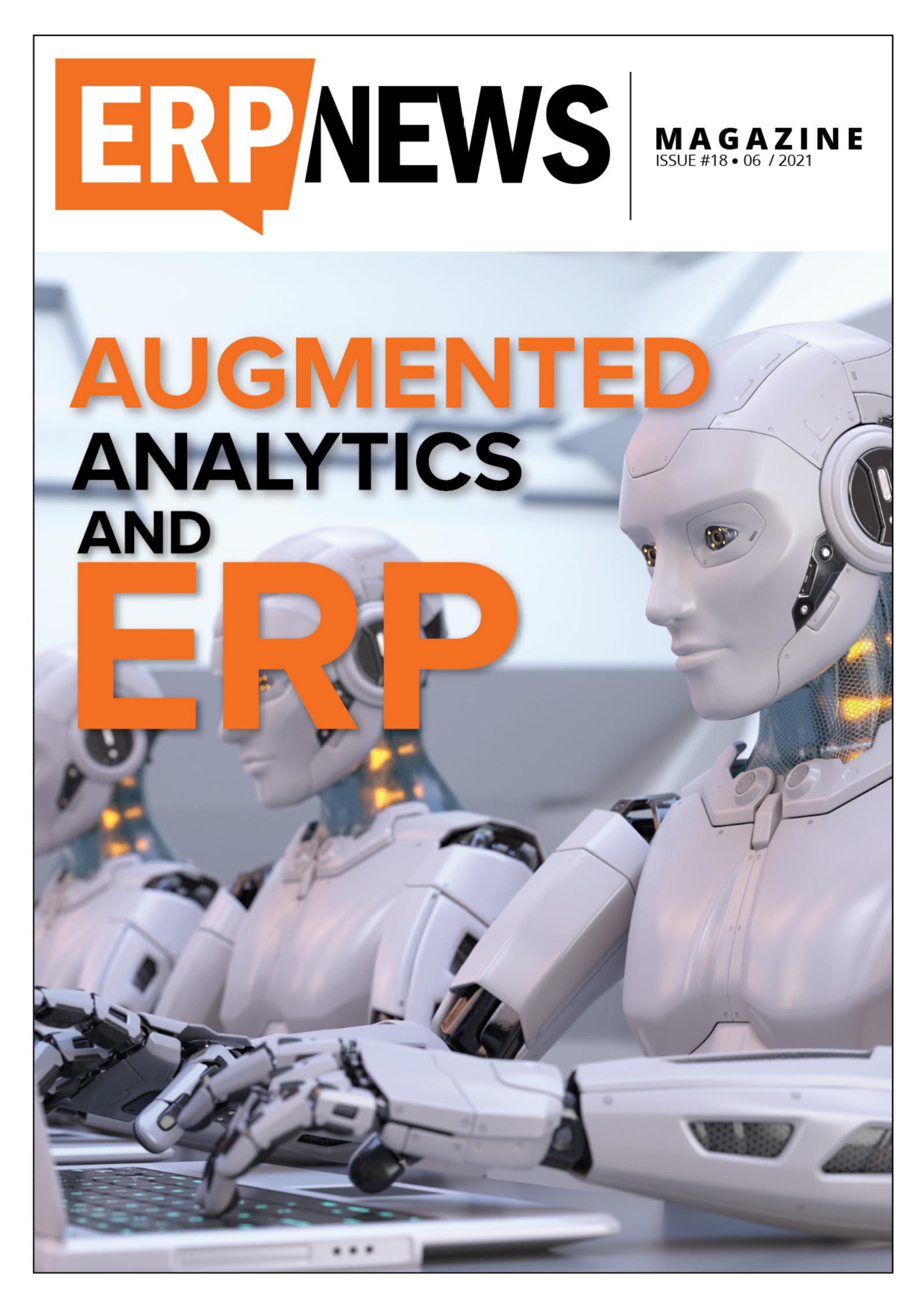
Augmented Analytics and ERP
How AI, machine learning and accessible analytics can support finance and enterprise decisions, with interviews from Prophix, Auditoria.AI and Agiloft.
About this issue
Turning enterprise data into useful decisions
How can businesses spend less time preparing data and more time understanding what it means? The June 2021 edition of ERP News Magazine explores augmented analytics and ERP through interviews, practical explanations and industry developments. Artificial intelligence, machine learning and natural-language interaction provide the common thread. The contributions connect automation with finance, planning and contract management, while customer examples show how accessible information and integrated processes can support operations.
Executive perspectives on finance and contract intelligence
Alok Ajmera, President and CEO of Prophix, discusses planning agility in an interview informed by research conducted with FSN Research among more than 500 global finance leaders. Gaps in forecasting, scenario planning and access to timely information frame his argument for cloud-based corporate performance management. He describes finance becoming a more proactive business adviser and discusses Prophix's AI Virtual Financial Analyst. The interview presents product capabilities and strategic priorities rather than a quantified customer implementation result.
Rohit Gupta, CEO and co-founder of Auditoria.AI, examines repetitive work in the finance back office. SmartFlow Skills address vendor management, accruals, collections and forecasting, with human operators involved when needed. Gupta describes Auditoria as an automation layer connected to ERP through APIs. His vision of a fully autonomous back office is a future expectation, distinct from the specific functionality discussed at publication.
Elisabeth Bykoff, Vice President of Global Alliances and Partnerships at Agiloft, considers how contract data can inform decisions across sales, legal and procurement. Her interview explains Agiloft's relationship with Tableau, existing integration and plans for a stronger connector. Flexible workflows, enterprise integration and AI-assisted document analysis underpin her view of contract lifecycle management. No-code configuration is presented as an approach to adaptability, not proof that every implementation requires little effort.
Understanding augmented analytics
Benjamin Arnulf's Oracle article connects descriptive, predictive and prescriptive analysis with financial decisions. Oracle Analytics for Applications for Fusion ERP provides context for automated data transfer, KPI exploration and additional data sources. Its broad claims about eliminating human error should not be treated as a guarantee of infallible data or decisions.
Lucy Thorpe, Head of Content at InCloud Solutions, explains how ERP data can become visual stories and scenarios. SAP Analytics Cloud illustrates natural-language questions, Smart Insights and sharing findings. Nishant Joshi, Technical Writer at Sage Software Solutions, examines data preparation, conversational analytics and access for users without specialist data-science skills. Both discuss reducing routine effort while making analysis more accessible.
Nil Peksen, a freelance SAP BI and Analytics Consultant/Architect, emphasizes the assistive role of augmented analytics. Her introduction explains data democratization and SAP Analytics Cloud's Search to Insight, Smart Insights, Smart Discovery and Smart Predict. Bob Stark, Global Head of Market Strategy at Kyriba, connects automation with business intelligence through ERP APIs, payments and liquidity forecasting. Anomaly detection and scenario analysis illustrate decision support, rather than guaranteed fraud prevention or perfect forecasts.
An expert panel from Trey Johnson, Chief Evangelist at ZAP, adds a qualification: midmarket ERP users may face more immediate data-management problems before advanced analytics becomes the priority. Andrew Dalziel's Infor-associated cloud article similarly begins with business strategy, asking organizations to assess their goals, operating models and total cost of ownership.
Customer stories and implementation context
The Tasmanian Government uses Oracle Health Management System for vaccination appointments, QR-based check-in, dose records and reminders. Australian cloud infrastructure supports authorized access to program and inventory information. The announcement reports approximately 20% of the eligible population vaccinated at that point; the figure describes program progress, not a measured uplift caused by the software.
Applegreen appears in PDI's innovation announcement as a user of its ERP, Fuel Pricing and Security solutions. Head of Retail Fuel and Analytics Lee O'Connor describes integrating fuel pricing with existing systems and gaining insight into price fluctuations. The testimony is qualitative, with no published margin improvement or financial return calculation.
Inca Digital Printers selected IFS to replace legacy systems across UK and US operations. The phased plan covers manufacturing and other business functions, with US service management initially integrating with existing finance systems. Greater visibility and efficiency are intended outcomes; the announcement does not report a completed rollout or quantified savings.
Otto Car, discussed in Gupta's interview, sought to scale finance operations without proportionate staff expansion. Auditoria's integration with Sage Intacct and use of AI and computer vision support its invoice-processing and reconciliation proposition. The interview describes the selection rationale and potential operational benefits without a verified hours-saved figure.
Z Nautic's IT manager Anthony Chapeltegui explains a decision to move to an Infor cloud solution. Relevant standard functionality, SaaS deployment and embedded analytics informed the choice. Giving users greater control over reports is a longer-term aim, rather than an already demonstrated result.
Research, ecosystem developments and community
NTT DATA research examines accelerated digital transformation among life and annuity insurers, while recognizing gaps in strategy and working platform ecosystems. Oracle NetSuite's State of Growth study reports respondents' experiences against business growth targets and expectations for hybrid work. These are publication-era survey findings, rather than a census of every organization in their markets.
News also covers SAP's embedded support approach, Epicor's acquisition of KBMax, Sage Intacct's Canadian data-center presence and IFS Cloud's Tech Ascension recognition. PDI's innovation program includes a planned investment exceeding $100 million over five years. Mark Franks, Platform Evangelist at Acumatica, discusses collaboration and learning around the 2021 Hackathon, with participant testimony from OFS International and Setech Supply Chain Solutions. Together, the issue connects analytics ambition with integration, practical adoption and the organizational work needed to turn information into action.
Read Issue 18 Online
The magazine is loaded directly from ERP News servers.