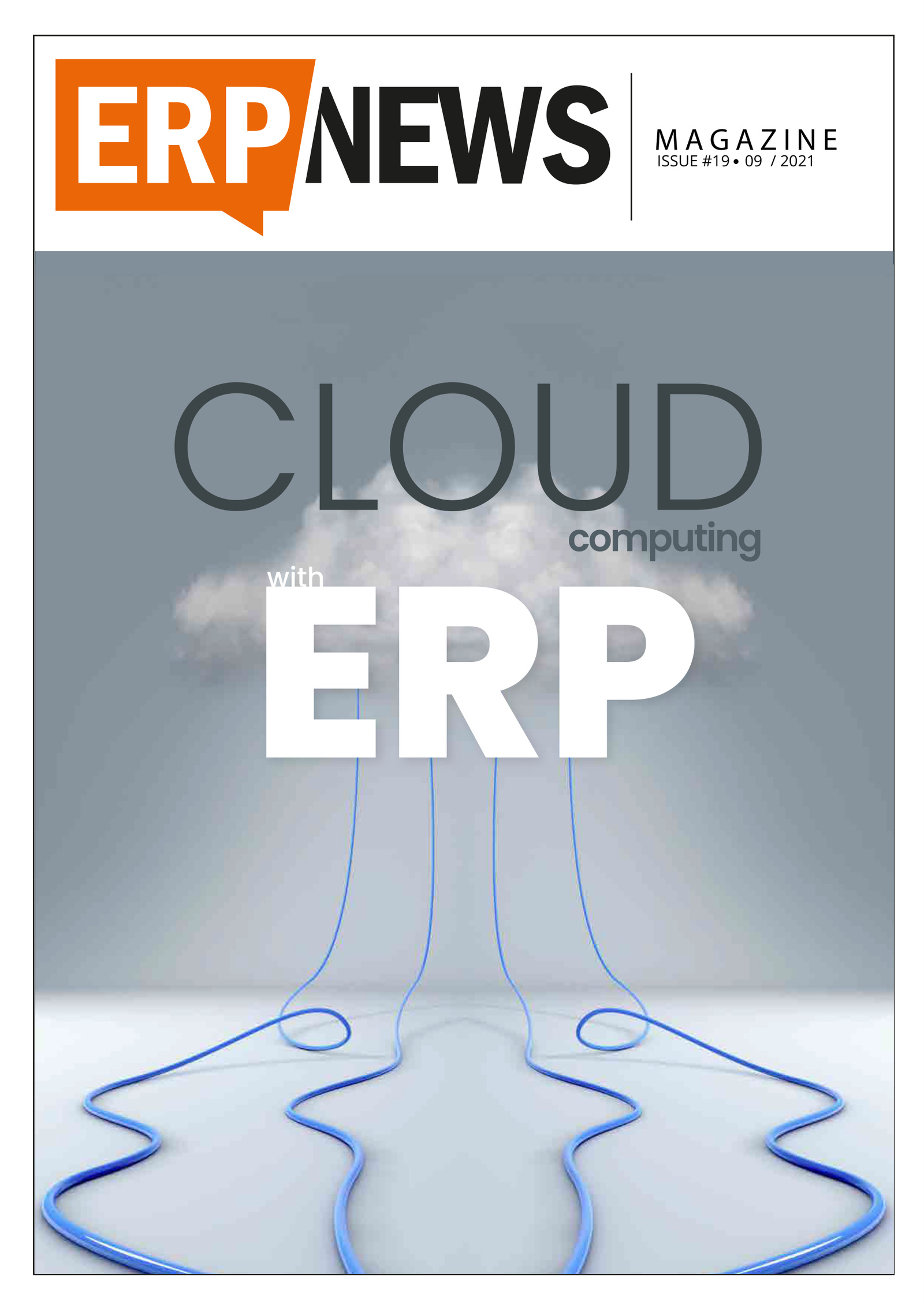
Cloud Computing with ERP
Cloud migration, accessible data and ERP readiness, with customer perspectives on finance, database infrastructure and the work that continues after go-live.
About this issue
Connecting cloud infrastructure with business needs
How can organizations turn more accessible data and flexible infrastructure into practical improvements? The September 2021 edition of ERP News Magazine examines cloud computing alongside ERP selection, finance operations and connected planning. Its editorial theme links cloud technology and large data sets with digital transformation, while contributors explore the choices, preparation and continuing support required. Customer examples range from database infrastructure within existing data centers to cloud accounting and post-implementation development.
Preparing for selection and migration
Chris Devault, Director of Selection Consultants and Influencer Relations at QAD, opens an ERP selection series with preparation for solution evaluation. He recommends establishing strategic objectives before approaching vendors, assembling a properly resourced team and obtaining informed outside help. Documenting current and future processes provides a basis for evaluating functionality and adaptability. Personal recommendations alone cannot replace a structured assessment of an organization's requirements.
Lucy Thorpe, Head of Content at InCloud Solutions, examines the commercial and practical choices behind cloud migration. Her discussion covers subscription plans, user types, customization, extensions, implementation and ongoing support, with SAP Business ByDesign and RISE with SAP providing context. A lower initial scope can simplify a starting point, but buyers still need to understand process fit and continuing costs. Nishant Joshi of Sage Software Solutions considers sustainability, edge computing, multicloud, hybrid models and security as cloud trends in 2021; a separate panel identifies factors affecting ERP costs.
Logan Berger, a development and technology consultant, discusses cloud storage, backup, security, collaboration and access to newer tools. These are potential capabilities to assess against service terms and business needs. Neither cloud adoption nor local data storage automatically guarantees unlimited capacity, zero downtime or protection against every security threat.
Customer stories: cloud services inside existing data centers
Jeffrey Erickson's Oracle article examines three Exadata Cloud@Customer users. At McMaster University, seasonal activity around student administration created a need for scalable infrastructure while retaining data on premises. The university reports consolidating more than 175 databases to fewer than 75, shortening data refreshes from ten hours to 1.5 hours and reducing backup time from an hour to seven minutes. These are reported results for McMaster's environment.
NTT West used Exadata Cloud@Customer to support services for larger customers while addressing data sovereignty and compliance requirements. The article reports a 40% reduction in system processing time. Elastic capacity and Oracle-managed service elements also supported its approach to pay-per-use offerings; the percentage is not presented as a universal result for all database workloads.
Lalux, the Luxembourg insurer, sought better use of infrastructure and support for regulatory requirements. Two quarter-rack configurations provided capacity for peaks of six times average usage, according to its CIO. The story emphasizes headroom and database capabilities rather than a quantified realized savings result. Capacity intended for future growth remains a planning expectation.
Customer stories: finance access and continuing improvement
Judy Hanover's accounting article draws on an IMA-hosted webinar sponsored by Sage Intacct. Rapid Ratings finance director Elliot Goldman describes reducing a month-long close to four days using cloud-based applications. The resulting time for analysis and forward planning is his reported customer experience, rather than a benchmark promised to every finance team.
Epitec finance team lead Melissa DuVall describes how prior adoption of Sage Intacct helped her team continue working remotely during the pandemic. She reports strong productivity and discusses more robust reporting as a future priority. The article supplies qualitative testimony without a measured productivity uplift.
Talix CFO Ashmi Shah emphasizes accessible financial information, automation and confidence in reported numbers. Her observations connect cloud accounting with remote working and checks and balances. They do not establish that automation removes every possibility of error. Hanover also considers provider reliability, security controls, partner ecosystems and industry-specific requirements.
Todd Kuhns, Senior Director of Professional Services at Acumatica, argues that implementation continues beyond go-live. Saddleback Leather illustrates this through its move from Oracle NetSuite to Acumatica and subsequent work with its partner to refine the system. The vendor-authored story reports a 33% reduction in technology costs, increased functionality and improved inventory visibility. Other benefits, including organic traffic growth, are reported alongside the transition without establishing that ERP alone caused each result.
Planning, service and industry developments
Anthony Stames's Oracle NetSuite article considers the financial information, reporting and controls needed when a business becomes public through an IPO or SPAC. Historical records and accessible operational data support its argument about ERP readiness. The discussion reflects the market and regulatory context at publication, rather than current transaction advice. The canias4.0 digital-factory article connects ERP, sensors, automation and data exchange with potential improvements in delivery, quality and operational visibility, while recognizing the need to rethink processes.
Andrew Dalziel's Infor-associated article examines continuous supply-chain planning through integrated business planning, S&OP, demand and supply planning, and production scheduling. IFS research considers the gap between measuring customer experience and acting on operational problems. Together, these contributions emphasize coordination across departments and business networks.
Servier's selection of Oracle Clinical One targets a unified environment for clinical-trial processes and data; the expected efficiencies are plans, not completed project outcomes.
Other news covers SAP's cybersecurity talent collaboration with Columbia SIPA, Agiloft's AWS Marketplace availability, Auditoria.AI's survey of back-office automation, NTT DATA Business Solutions' workplace recognition and IFS's distribution agreement with Technodyn. Sage's HR research closes the issue by examining the difference between having people data and using it in business decisions. Across the edition, accessible information becomes valuable through deliberate process design, realistic evaluation and continued improvement.
Read Issue 19 Online
The magazine is loaded directly from ERP News servers.