For Successful Businesses, Improvement Is Continuous
ERP selection, implementation partnerships and continuous improvement, featuring Nick Goode, cloud strategy and lessons from historical projects.
About this issue
Improvement beyond the Initial Implementation
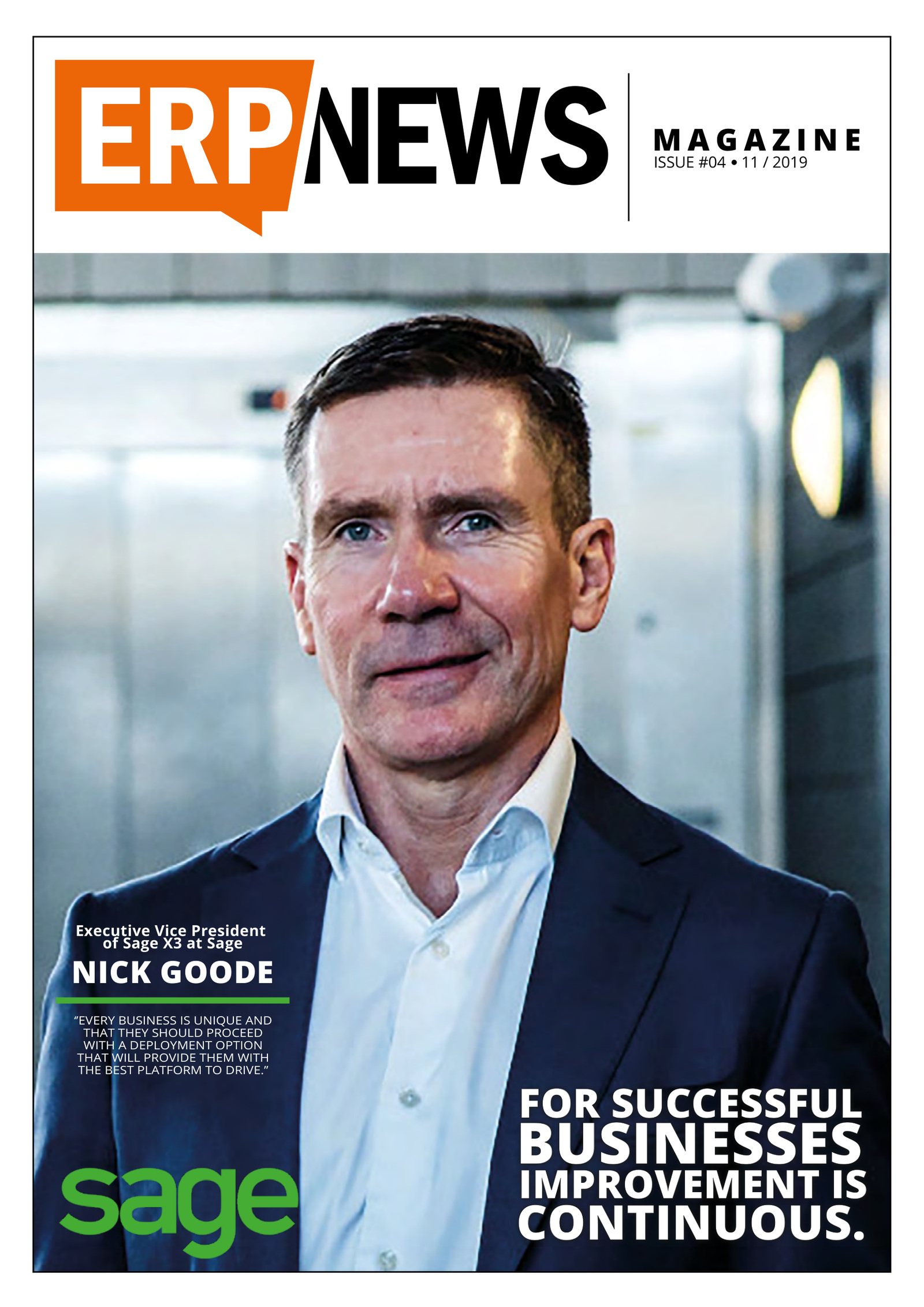
ERP News Magazine Issue 4, dated November 2019, connects ERP selection with the continuing work of business improvement. The cover interview, partner perspectives, manufacturing articles and historical project analysis all examine the decisions that surround the software itself. The issue considers how deployment choices, trust, industry knowledge and clear expectations shape an ERP program. Its comparative and predictive material reflects the market and available research at the time of publication.
A Business-Specific Approach to ERP
Nick Goode, Executive Vice President of Sage Business Cloud X3, discusses software selection and the shift toward cloud delivery. His interview emphasizes that businesses differ in their needs and should judge deployment options against their own operational requirements. Industry complexity, usability and the ability to work away from a desk enter that discussion. The cover's continuous-improvement theme places implementation within an ongoing business journey, rather than treating the go-live date as the end of the work.
Robin Irvine of Avaap examines cloud readiness in food and beverage manufacturing. Meat, poultry and seafood processors need systems that handle industry realities such as labeling, batch management, catchweight and traceability. His article connects these requirements with the choice of a vendor and implementation partner. It also cautions against assuming that every generic system can support specialist needs without additional work. The accompanying partner-selection discussion adds cultural fit and relevant experience to the assessment.
Industry Fit, Mobility and Adaptability
Jesse Linklater of Genius ERP considers the operational complexity of machinery and equipment manufacturing. Multi-level assemblies, inventory and coordinated workflows make sector fit a practical requirement. Lucy Thorpe of InCloud Solutions explores the future of cloud ERP through integrated suites, changing interfaces, mobile access and the business-change work required during implementation. Her article looks beyond the hosting location to the ways users consume and maintain enterprise applications.
Eran Rozenfeld of Priority Software discusses mobile ERP, connecting access from phones and tablets with timely operational information and customer-facing work. His partner-selection contribution reinforces the importance of choosing people who can support the implementation as a business project. Brent Dawkins of QAD examines adaptive ERP and the ability to respond to disruption. A related QAD panel from Robin Riordan considers implementation partners through the business outcomes a project is expected to deliver.
More4Apps and Enginatics announce a marketing partnership around Oracle E-Business Suite. Their complementary tools address spreadsheet-based data entry and reporting. The article is a supplier collaboration announcement, rather than a named customer deployment, while Andy Haack contributes a separate view on the experience and agility of implementation teams.
Cloud Planning and a Customer Example
Eilidh Clarkson of Absoft examines the decision to move SAP systems to the cloud. Security, flexibility, visibility and cost all feature in her assessment, but the article stresses the value of rationalizing the existing landscape first. Moving unnecessary complexity unchanged can weaken the business case. Her unnamed public-sector customer example reports a reduction in server hosts and hosting costs following rationalization and migration. The figures are attributed results in the article, not a named independently audited case or a general promise for every cloud project.
Jennifer Brown of Absoft adds a partner-selection perspective centered on trust, communication and continuity of support. Alexander Glueckler of Silverware emphasizes experience, competence and fair treatment of customer needs. Guy Leclercq of Deveho Consulting Group adds the importance of a clear offer, transparent working methods and trust. These short contributions complement the longer articles by making the working relationship part of the ERP decision.
Learning from Historical Projects
Technology Evaluation Centers discusses historical difficulties at Nike, Avon, the U.S. Air Force, Waste Management and Hewlett-Packard. The lessons concern business alignment, appropriate standardization, realistic budgets and resources, dedicated change management and contingency planning. Each example serves a different instructional purpose. The source includes estimates, disputed responsibilities and retrospective interpretations, which should not be read as fresh findings or definitive judgments about every participant. The summary therefore emphasizes the management lesson rather than repeating headline loss figures as independently established facts.
The issue also summarizes Panorama Consulting Group's Clash of the Titans 2020 comparison of SAP, Oracle, Microsoft and Infor. Its survey-based observations concern different project populations, scopes and organizational circumstances, rather than proving one universally superior product. Opening news covers SAP's capital-return announcement, Infor's mobile hotel guest experience, NetSuite activity in France, Oracle construction and engineering awards, and Gartner's digital-experience trends. Yagmur Sahin's mobile ERP article closes the substantive coverage. Across these varied pieces, the common concern is making choices that remain useful as the business, its people and its operating environment continue to change.
Read Issue 4 Online
The magazine is loaded directly from ERP News servers.