ERP and the Gig Economy: Technologies for a Flexible Workforce
Explore how ERP partnerships, workforce practices, connected data, and cloud platforms support a more flexible way of working.
About this issue
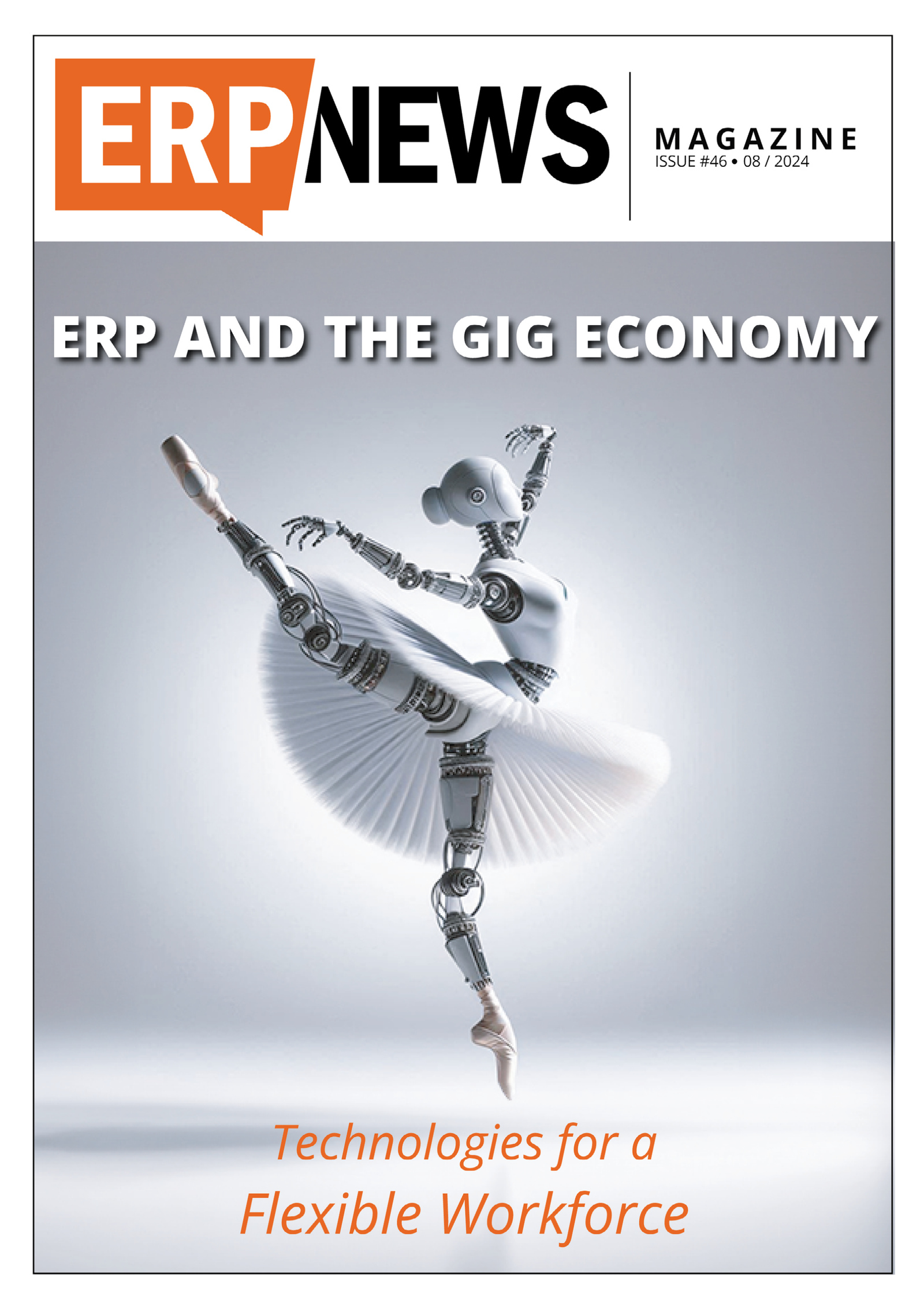
ERP and the Gig Economy: Technologies for a Flexible Workforce
How can businesses gain flexibility while keeping people, processes, and operational data connected? ERP News Magazine Issue 46, August 2024, explores the gig economy alongside the systems that support changing workforce models. Its coverage connects project-based expertise, HR practices, remote learning, manufacturing information, and cloud ERP modernization.
The issue brings together an Acumatica interview, practical guidance, research, industry announcements, and customer experiences. Flexibility emerges as an organizational capability that depends on clear responsibilities, reliable information, appropriate technology, and the skills to use it.
Executive Perspective: Building a Collaborative ERP Ecosystem
Daniel Oh, Vice President of Business Development at Acumatica, explains the company's new Alliance Program. Aimed at accounting firms, independent software vendors, consultants, and other organizations serving SMBs, the program combines training, advisory expertise, marketing resources, collaboration, and community participation.
Oh describes co-innovation as a way to bring industry, technology, and finance knowledge together around customer needs. Prospective members apply, undergo approval, and maintain certification. The interview presents the program's intended strategic value and future direction; it does not establish measured customer ROI or a dedicated gig-worker management module.
Flexible Work, HR, and Professional Development
DXoneERP examines gig workers' role in IT departments, including access to specialist expertise, project-based scaling, onboarding, remote collaboration, security, and knowledge continuity. Madhura Kulkarni, Head of Marketing for TCS Chroma, considers the HR implications of flexible work: recruitment, compensation, performance, engagement, classification, training, and protection for workers.
Bruno Boksic, a freelance HR writer contributing through Sage, describes shorter feedback cycles, performance development, and goals created jointly by employees and managers. He connects performance management with organizational alignment and considers technology across planning, review, coaching, and rewards.
Alan Margulis, Marketing Content Writer at ECI Software Solutions, explores five routes to upskilling or reskilling from home: online education, focused skills resources, mentoring, professional associations, and career mapping. A b2e Consulting contribution examines freelance and interim expertise and leaner consultancy models, while some statistics retain an earlier source period and require historical interpretation.
Manufacturing Discipline, Data, and Enterprise AI
Chris Pinaire, MBA, PMP, Director of New Implementations at Global Shop Solutions, sets out seven manufacturing wastes: transportation, inventory, motion, waiting, overproduction, over-processing, and defects. Value-stream mapping, 5S, scheduling, inventory visibility, quality controls, and corrective action connect operational discipline with ERP support.
John Knight, Supply Chain Consultant at Nexer Enterprise Applications, distinguishes KPI data, AI and machine information, and ERP data. His discussion links Microsoft Dynamics 365 and connected information with forecasting, planning, workforce coordination, and a culture of evidence-based decisions. Abas broadens the manufacturing perspective through digital factories, IoT, robotics, analytics, and incremental modernization.
Lucas de Boer, Global Marketing Program Lead for SAP Signavio, introduces process and performance-indicator recommenders, while separating released capabilities from a process-mining copilot then in beta. Sandeep Kumar Singhdeo, Data and Analytics Manager at Infosys, examines generative AI for segmentation, customer insight, value propositions, and personalized engagement. Christoph Nagy, CEO of SecurityBridge, discusses HTTP/2 Rapid Reset exposure in SAP environments and the importance of component-aware patch management.
Industry Developments and Business Transformation
Lumenia previews the Dublin ERP HEADtoHEAD event, bringing fourteen solutions into standardized demonstrations. ECI announces its completed ProfitKey acquisition, while Rootstock research reports changing expectations of cloud ERP, particularly cost reduction, agility, security, simpler IT, and workforce productivity. These are respondents' priorities rather than achieved software outcomes.
Forterro's Aldridge Security account describes Orderwise connecting ecommerce, service, warehouse, and inventory workflows. The wholesaler reports three hours saved daily on website updates, a 9.5% increase in web order value, and a 48% improvement in average goods received per operator rate. Boll & Branch describes NetSuite's role in finance and inventory automation, omnichannel visibility, and supply-chain information, without a quantified ROI claim.
Acumatica news includes Phoenix Renovation and Restoration, DiamondBack Truck Covers, and Q-PAC Systems moving beyond basic accounting. Phoenix reports stronger cash-flow conditions, DiamondBack reports less time gathering data, and Q-PAC's five-to-tenfold production expansion remains a plan. Further announcements cover a proposed CVC investment alongside CD&R in Epicor, informXL's expanded BRIX analytics offering, VitalEdge's Inc. 5000 recognition, and Sage Intacct's AP Automation and region-specific release enhancements.
Customer Stories: Cloud, Visibility, and Operational Change
Stokes Electric Company moves Epicor Prophet 21 to the cloud and uses Wireless Warehouse, Epicor Data Analytics, and EDI to improve distribution operations. Director of IT and Purchasing Angela Dunaway and CEO and Co-owner Don Stokes describe more consistent access, data-led staffing, and pick time falling from 120 seconds to 43.63 seconds. The reported improvement concerns that picking measure rather than an equivalent reduction in total operating costs.
An unnamed North American medical-device manufacturer adopts Cumulocity IoT after its previous remote-management vendor sunsets a product. The case describes rapid device connection, remote software distribution, and support for different location-based requirements. Its IoT Platform Manager estimates more than $3.5 million in annual travel-related update savings. The customer remains anonymous, and regulatory-support capabilities are not treated as independent compliance certification.
Sunshine Lighting replaces disconnected spreadsheets and an unreliable legacy system with Acumatica Distribution Edition, implemented with Appsolute Consulting. Executives describe automated workflows, open-API customization, mobile warehouse access, and improved financial visibility. CFO Jacob Hartman estimates annual technology savings exceeding $200,000. The story reports inventory accuracy above 90%, although its opening and body use different earlier baselines. Together, these accounts show how connected platforms can support operational flexibility when process improvements and user participation accompany the technology.
Read Issue 46 Online
The magazine is loaded directly from ERP News servers.